
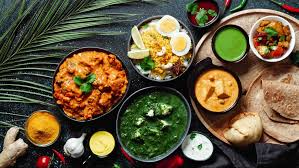
The Strange Thing About Indian Food Is That Nobody Fully Agrees On What It Is
Ask ten people what Indian food means and the answers start changing immediately. Someone says rich curries. Someone says dosa. Someone thinks about smoky kebabs. Someone else immediately remembers roadside chaat. The funny part is that none of them are wrong. People often talk about Indian food as if it belongs in one category, but that becomes difficult the moment travel begins. A meal eaten in one city may look completely unfamiliar a few hundred miles away. Even people who grew up eating Indian food discover this repeatedly.
A Train Ride Can Change What Appears On The Table
There is a reason many travelers notice food changing before they notice anything else. Travel north and suddenly bread becomes more common. Travel toward coastal areas and seafood quietly becomes part of everyday meals. Move somewhere warmer and ingredients shift again. These changes did not happen because regions wanted to be different from one another. People cooked with what existed around them. What farmers grew mattered. What survived certain climates mattered. What ingredients could be stored mattered. Over time, these practical decisions slowly became traditions. Then traditions became identity.
Two Families Living In The Same City May Still Cook Completely
Perhaps this is what surprises people the most. Regional food is only part of the story. Households create another layer. Many people have experienced this moment. You eat something at a friend’s home and immediately say, "This doesn’t taste like the version we make." Neither version is necessarily more authentic. They are simply different. Some households prefer stronger spice. Others cook milder food. Some recipes become sweeter over generations. Others become richer. Grandparents change recipes. Parents simplify them. Children eventually modify them again. Food keeps moving. That is why exact definitions become difficult.
Spice Is Probably The Most Misunderstood Part
There is a strange assumption that Indian food equals extremely spicy food. People who grew up eating Indian food know it is more complicated. Spice is not only heat. Sometimes spice creates aroma. Sometimes it creates warmth. Sometimes it adds bitterness or sweetness or depth without making food feel hot at all. This is why somebody can eat two dishes containing similar ingredients and still feel like they belong to completely different cuisines. The spice box stays similar. The results do not.
Street Food Changed The Story Too
Restaurant menus tell only part of the story. Many food memories come from somewhere else entirely. Standing beside crowded stalls. Eating while walking. Waiting near carts after school. Stopping during long drives. Street food shaped how many people experience regional cuisine because it created foods connected to places. People visit cities and immediately ask about specific snacks. Not because those dishes are complicated. Because they belong there. Sometimes one small snack says more about a place than an entire restaurant menu.
Food Often Carries More Memory Than People Realize
Ask someone why they love a certain dish and the answer is rarely technical. They usually do not mention spice ratios or cooking temperatures. Or preparation methods. They mention grandparents, festivals, summer vacations, family gatherings. Certain foods survive because people become emotionally attached to them. That attachment keeps recipes alive even when lifestyles change. Contact us to book your table today.